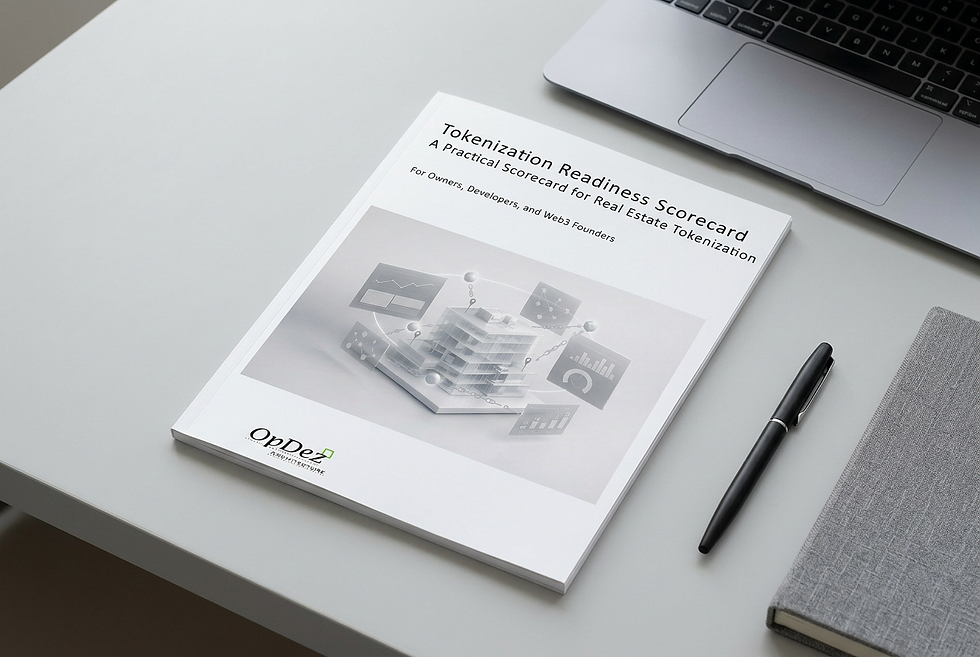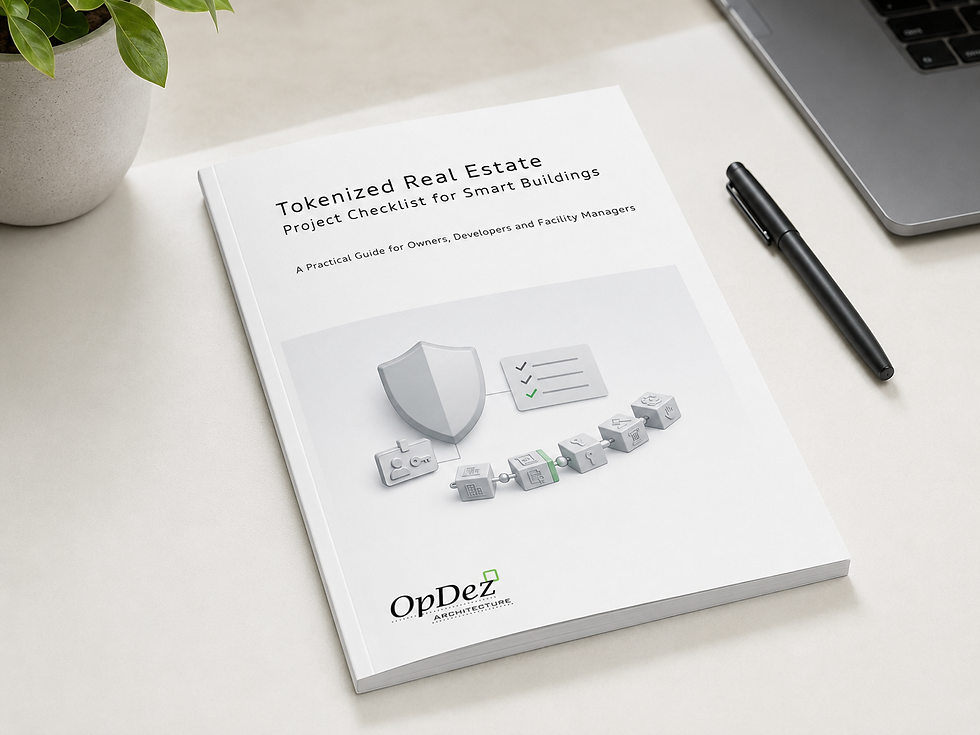
Architecture Tokenization
Transforming Architecture into Tokenized Digital Assets
Architecture Tokenization is the process of converting architectural intellectual property, design systems, and building-related data into secure, structured digital assets that can be licensed, distributed, and managed within a blockchain-enabled ecosystem.
At OpDez Architecture, tokenization is not limited to NFTs. It extends across architectural design, BIM systems, Digital Twins, AI-generated design frameworks, construction methodologies, and future intelligent building systems.
This page explains how architecture becomes part of a structured digital asset economy powered by Web3 technologies and the OPDZ utility layer.

What is Architecture Tokenization?
Architecture Tokenization is the process of representing architectural intellectual property as structured digital assets that can be:
-
Licensed
-
Distributed
-
Tracked
-
Verified
-
Monetized
-
Integrated into digital systems
These assets may include both NFT-based collectibles and non-NFT functional digital tools, depending on use case and licensing structure.
Unlike traditional architecture workflows where intellectual property remains static and project-bound, tokenization enables architecture to become programmable, reusable, and digitally transferable.
What Can Be Tokenized?
Within the OpDez ecosystem, architecture tokenization may apply to:
Architectural Design Assets
-
Concept designs
-
Building typologies
-
Facade systems
-
Structural frameworks
-
Urban planning systems
-
Parametric design models
BIM (Building Information Modeling)
-
BIM families
-
Parametric components
-
Construction documentation sets
-
Engineering systems
-
Design coordination models
Digital Twins
-
Building performance models
-
Facility operational systems
-
Smart building simulations
-
Energy modeling frameworks
-
Lifecycle management systems
AI-Generated Design Systems
-
Generative design models
-
AI-assisted architectural workflows
-
Optimization algorithms
-
Design prompt libraries
-
Automated design logic systems
Smart Building Systems
-
IoT integration frameworks
-
Energy management systems
-
Predictive maintenance models
-
Building automation logic
-
Intelligent infrastructure systems
Intellectual Property & Research
-
Architectural publications
-
Technical methodologies
-
Design standards
-
Engineering frameworks
-
Innovation research documents
Why Tokenize Architecture?
Traditional architectural IP is:
-
Static
-
Project-specific
-
Difficult to license
-
Hard to scale
-
Limited in reuse potential
Tokenization transforms architecture into:
1. Programmable Assets
Designs become structured digital units that can be reused, licensed, and tracked.
2. Scalable IP Systems
A single design system can generate multiple licensed implementations.
3. Verifiable Ownership
Blockchain-based systems provide proof of origin and authenticity.
4. Monetizable Ecosystems
IP can generate value beyond a single project lifecycle.
5. Interoperable Digital Systems
Architecture can connect with BIM, AI, Digital Twins, and smart building platforms.

Tokenization vs NFTs
It is important to distinguish between two systems in the OpDez ecosystem:
Category | NFTs | Architecture Tokenization |
|---|---|---|
Purpose | Collectible assets | Functional architecture systems |
Use Case | Art, editions, collectibles | Design, engineering, operations |
Format | On-chain tokens | Hybrid digital assets (on/off-chain) |
Function | Ownership proof | Licensing + system deployment |
Example | Power Pyramids NFT | BIM system or Digital Twin model |
NFTs are one expression of tokenization, but not the full system.

OpDez Tokenization Model
The OpDez tokenization model operates in layered structure:
Layer 1: Intellectual Property Creation
↓
Layer 2: Digital Asset Structuring
↓
Layer 3: Licensing Framework Definition
↓
Layer 4: Tokenization (NFT or Digital Asset)
↓
Layer 5: Marketplace Distribution
↓
Layer 6: OPDZ Utility Integration
↓
Layer 7: Enterprise & Collector Participation
This structure ensures that every asset is properly governed, licensed, and scalable.
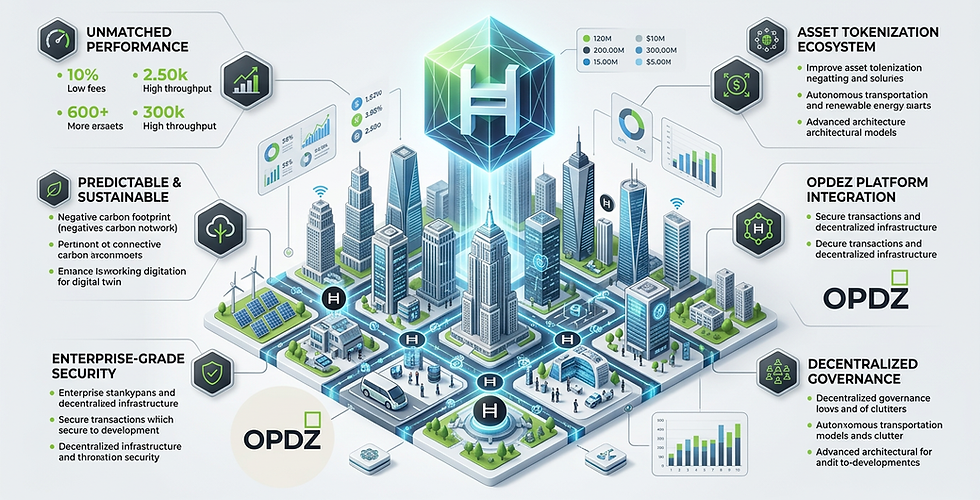
Blockchain Role (Hedera Integration)
The OpDez ecosystem leverages blockchain technology for:
-
Asset verification
-
Ownership tracking
-
NFT issuance
-
Digital asset authentication
-
Marketplace transactions
The Hedera network is positioned as the primary infrastructure layer due to:
-
Fast finality
-
Low and predictable fees
-
Enterprise governance structure
-
Native token support (HTS)
-
Sustainable carbon-negative operations

OPDZ Utility Layer
The OPDZ token functions as the utility layer across tokenized architecture systems.
Potential uses include:
-
Access to tokenized design systems
-
Marketplace participation benefits
-
Digital asset licensing advantages
-
Early access to new architecture releases
-
Token-gated professional tools
-
Future Digital Twin integrations
-
Smart building system access
OPDZ does not represent ownership of architectural intellectual property or real-world assets. It functions as a utility access layer within the OpDez ecosystem.
Enterprise Applications
Architecture tokenization enables enterprise use across:
Architecture Firms
-
Reusable design systems
-
Licensed BIM libraries
-
Standardized design assets
Developers
-
Pre-validated building systems
-
Modular design frameworks
-
Project acceleration tools
Governments
-
Infrastructure modeling systems
-
Smart city frameworks
-
Public planning models
Universities
-
Educational design systems
-
Research datasets
-
Simulation models
Technology Companies
-
Digital Twin integration
-
AI architecture systems
-
Smart building platforms
Digital Twin + Tokenization Integration
One of the most advanced applications of architecture tokenization is integration with Digital Twins.
Tokenized Digital Twins may include:
-
Real-time building performance data
-
Energy consumption models
-
Maintenance prediction systems
-
Operational simulation environments
-
Lifecycle digital asset tracking
This enables buildings to become continuously evolving digital systems rather than static structures.
Future Tokenization Expansion
The OpDez tokenization framework may expand into:
-
Real estate-linked digital assets (future regulated development)
-
Smart building system tokens
-
AI-generated architecture systems
-
Subscription-based BIM ecosystems
-
Software-as-a-token models
-
Enterprise licensing NFTs
-
Digital infrastructure tokens
Any real-world asset tokenization involving ownership, revenue rights, or financial participation will require full legal, tax, and regulatory review prior to implementation.

Ecosystem Relationship
Architecture Tokenization connects all OpDez Web3 components:
Architecture IP
↓
Tokenization Engine
↓
NFT Marketplace + Digital Asset Marketplace
↓
OPDZ Utility Layer
↓
Collectors + Professionals + Enterprises
↓
Digital Twins + Smart Buildings + AI Systems
Roadmap
Phase 1: Foundation
-
Define tokenization framework
-
Establish licensing models
-
Structure digital assets
Phase 2: Marketplace Integration
-
NFT asset linking
-
Digital asset listing structure
-
Hedera integration planning
Phase 3: Utility Expansion
-
OPDZ integration
-
Token-gated assets
-
Professional tool access
Phase 4: Enterprise Tokenization
-
BIM systems
-
Digital Twin frameworks
-
Smart building integration
Phase 5: Advanced Systems
-
AI-driven tokenization
-
Real-time digital asset generation
-
Smart infrastructure ecosystems
FAQ
What is Architecture Tokenization?
It is the process of converting architectural intellectual property into structured digital assets that can be licensed, tracked, and distributed through digital systems.
Is this the same as NFTs?
No. NFTs are one form of tokenization. Architecture tokenization includes both NFTs and functional digital systems like BIM and Digital Twins.
What can be tokenized?
Architectural designs, BIM systems, Digital Twins, AI models, smart building frameworks, and research systems.
Does tokenization transfer ownership?
No. Intellectual property ownership remains with OpDez Architecture, P.C. unless explicitly licensed otherwise.
What is OPDZ’s role?
OPDZ functions as a utility layer for access, participation, and ecosystem engagement.
Legal Disclaimer
Architecture tokenization does not transfer ownership of intellectual property, real estate, or physical assets unless explicitly stated in a separate legal agreement.
All architectural works, BIM systems, Digital Twin models, AI frameworks, and related intellectual property remain the property of OpDez Architecture, P.C. unless otherwise licensed in writing.
Tokenized assets may represent access rights, licensing rights, or digital representations only and do not constitute securities, equity, debt, or investment contracts.
Future applications involving real estate, revenue participation, or asset-backed tokenization will require full legal, tax, and regulatory review prior to implementation.
Build the Future of Architecture
Architecture is no longer static, it is programmable, scalable, and tokenized.
Explore the Ecosystem
-
OPDZ Utility Token
-
NFT Marketplace
-
Digital Asset Marketplace
-
Power Pyramids
-
Web3 Overview
-
Roadmap